Co-Regulation Offers a Pathway to Stillness
October 4, 2026
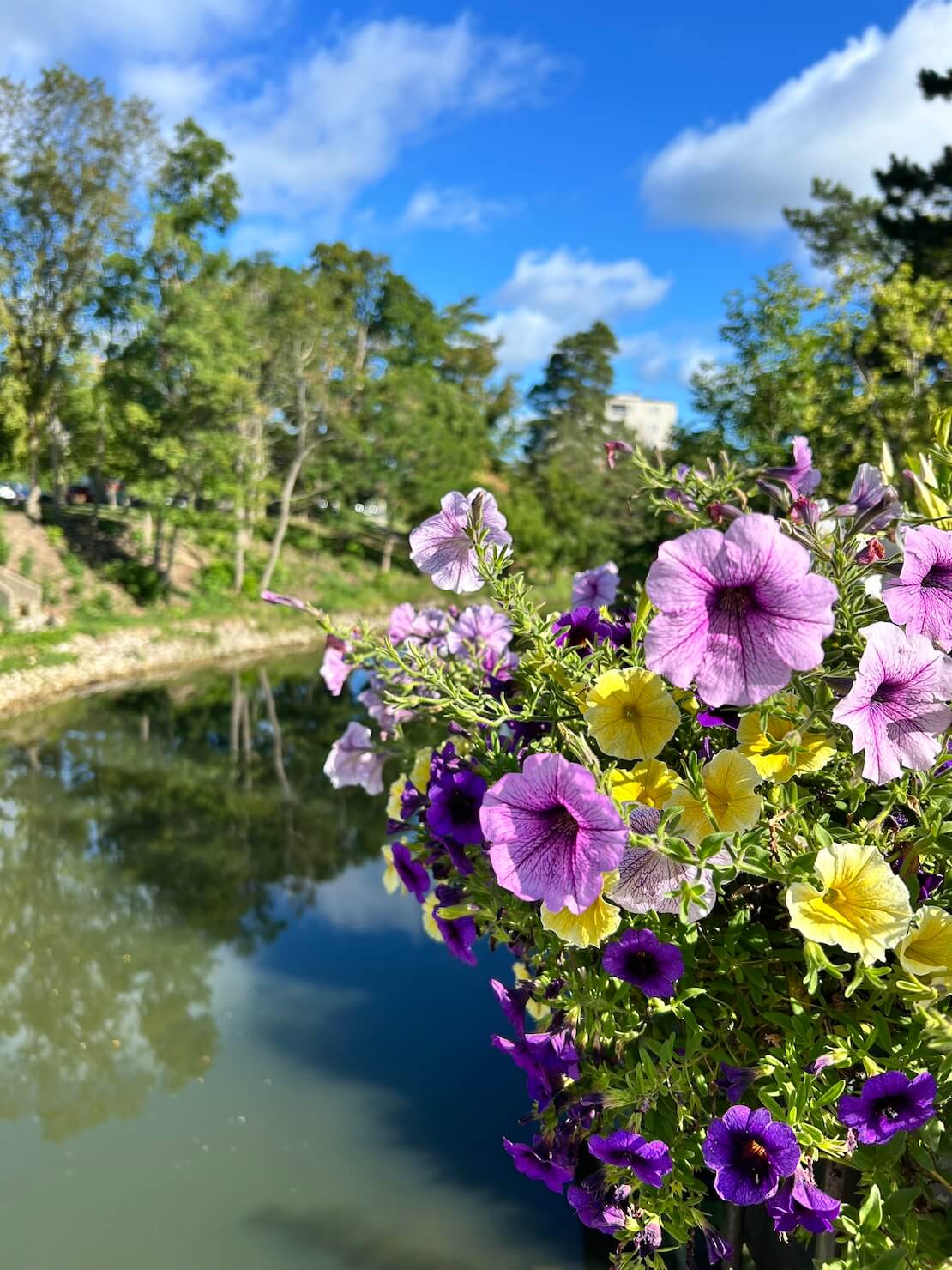
Connecting with other people or with animals or nature — also known as co-regulation — can help bring you back into regulation after being activated.
Over the past two years, I’ve learned many tools that helped me climb out of the dark pit of depression and panic attacks I fell into several years ago, after the death of both my parents, the unexpected death of one of my cats, and ongoing tension in my relationship.
Orienting to the environment. Noticing the sensations in my body. Watching my breath. Gentle movement. Being mindful as I wash the dishes, make dinner, or wait in line at the grocery store—which often means putting down my phone and staying present with the sensations in my body.
I learned many of these techniques through decades of meditation and yoga, as well as years as a yoga teacher. For a long time, though, I struggled to put these tools into practice, or when I did use them, I still felt activated or depressed.
I remember so many times sitting on a meditation cushion watching my breath, only to realize later that I had dissociated completely, which is why it felt so easy. And all those yoga classes where I went home and struggled to sleep that night. And the supposedly mindful activities where my mind raced the entire time as I watched myself mopping the floor or weeding the garden.
Settling into morning stillness
Recently, this has shifted. These practices seem to bring me more easily back into balance, with my mind settling into gentle detachment from the world, noticing but not grasping. It’s almost as if I am experiencing these tools with fresh eyes (and body).
The reason for this shift came to me this morning as I walked Oreo, an appropriately named white-and-black Shih Tzu mix that I’m watching for two weeks. Just before we left the house, the rain had stopped, so the neighborhood was cloaked in a misty silence, the world vibrant and soothing at the same time.
My mind sometimes spins on our morning walks, as I think about all that I need to get done in order to move forward in my new life, or on high alert for other dogs (which Oreo despises with a passion), or my thoughts drifting back to the loss of my relationship (even two years later).
But today, I felt a deep stillness and focus. I let my senses wander my environment—tracing the outlines of the houses, cars, and trees; listening to the sounds of birds singing in the tree tops and the distant hum of traffic in the city down below in the valley; and noticing shapes, colors, and textures in the neighborhood without needing a running commentary on what my senses were taking in.
I was able to just be.
Finding safety through co-regulation
As my nervous system settled, so did Oreo’s. His little legs often work overtime as he rushes toward his canine archnemeses or tries to escape having to walk outside (which he often despises), but this morning they slowed into a steady, prancing rhythm.
This is co-regulation. My body sent signals of safety to Oreo through my facial expression, vocal tone, gestures, and postures. None of this was conscious. As I came back into regulation, my body became a beacon of safety that could help Oreo enjoy our walk with more ease.
Co-regulation is something we “learn” early on as newborns. We don’t actually learn it, because it’s hardwired into our mammalian nervous system. Co-regulation is essential for infants because their nervous system is not fully developed, so they are unable to self-regulate, to bring themselves back into a state of calm.
An infant depends on the nervous systems of their primary caregivers to come into regulation after being activated. Mothers, fathers, and others basically lend their nervous systems to the infant. When an infant is upset, the caregiver comforts them. When an infant is afraid, the caregiver helps them feel safe. When an infant is feeling sad, the caregiver supports them to return to joy. Again, much of this happens below the level of conscious awareness, the same way it was between me and Oreo.
Co-regulation is a lifetime activity
Over time, an infant will develop the ability to self-regulate, to find its own way back into regulation. But it will never outgrow the need for co-regulation. Humans evolved as relational beings, so we are meant to continue co-regulating throughout our lifetime. Within our community of safe people, we stabilize each other’s nervous systems. This is why loneliness and isolation can have such a profound effect on our physical health.
Think about a time when you were at ease around close friends or family members. Maybe you felt a sense of safety. Or the stress of your week melted away, sometimes without even having to talk about what had happened. Or you were finally able to let tears flow that had been building throughout the day. This is co-regulation.
Co-regulation can happen in person or long distance. I have close friends who I can reach out to when I’m struggling; all they have to do is leave me a short voice message and I immediately feel calmer and more balanced. It’s not so much what they say that matters—although they always say kind things—but instead, being able to hear their voices reminds my nervous system that I am safe.
The calm after the emotional storm
This morning, I also realized that the calm feeling I felt while walking Oreo was due to co-regulation I experienced a day earlier. This kind of ease in my system often occurs after I’m able to navigate a period of intense activation. It’s like the stillness that settles over the countryside after a thunderstorm passes through.
The day before, I had been struggling with dissociation, my mind and body blank and hollow; starting to slip into despondency, that feeling of wanting to give up on everything, similar to what I experienced so often during my last relationship.
In the past, a loss of hope like this might have led to me wishing to leave this world. So when I started to feel this and couldn’t shake it, I immediately grew concerned. Was I slipping backwards? Was all my healing over the past two years for nothing? Was I broken?
By later in the day, though, this emotional storm had lifted. At the time, the way it passed surprised me, but looking back, it makes so much sense.
Simple connection calms the nervous system
That day, I had a haircut scheduled just after noon, so I arrived early and sat in the small waiting room, the wall lined with hair products. As I waited, one of the hair stylists mentioned that Dolly Parton had died. My mother loved her, so I grew up listening to Dolly’s music. Even today, she’s a regular on my playlists.
When I heard the news of her death, I was sad. But because I was still stuck in dissociation, it was more of a cerebral sadness, an acknowledgement of the deep loss for Dolly’s family and fans, and also thoughts of how sad my mother would have been, if she were still alive.
When it was time for my haircut, I settled into the chair and caught up with Andrea, a woman who has been cutting my hair every six to eight weeks for almost ten years. We talk so regularly that it feels like we are friends. She tells me about her kids and her cats, and in the past, I talked about my family, and after the end of my relationship, my new adventures. We’ve seen each other through many stages in our lives. Even on days when she is stressed, I feel more at ease after having my hair cut.
As we talked, I felt the blankness in my system starting to soften, my mind distracted by our conversation, with another shift happening deeper in my body. After my haircut, Andrea washed my hair. There’s something very soothing about having your hair washed; it’s like a massage, but with the cleansing energy of flowing water. Rebalancing the scalp while invigorating the soul.
Co-regulation is healing and supportive
Afterward, as I was paying for my haircut, I joked that Andrea would only be able to cut my hair one more time, because I was leaving this area, with an eye toward moving to British Columbia. I have been living in this area for fifteen years, the entire time that I’ve been in Canada. While it is time for a change, leaving is still hard.
As I walked outside to my car, my dissociation thawed completely and unexpectedly. Tears started flowing, with no sign of stopping—for losing Dolly so young, for the death of my mother seven years earlier, for having to say goodbye in two months to Andrea, for the loss of my relationship, and for other things that I wasn’t aware were floating near the surface until that moment.
The emptiness I had been overwhelmed with the day before was replaced by deep feeling. My tears continued to flow on and off throughout rest of that day. Any sad video online about foster animals or people healing from trauma brought forth a new wave of tears. Even hearing about the death of actor Tim Curry and Peter Cullen (the voice actor known for the cartoon versions of Optimus Prime and Eeyore) left me teary.
I was open and raw, feeling everything.
Later, I realized that this shift was the result of the thirty minutes I had spent with Andrea—talking with someone I have known for almost a decade and having my hair washed by a person I feel safe with. Such simple acts, but incredibly healing.
Healing, especially if you have experienced trauma, does not happen in isolation. You can do much healing work on your own—self-study, meditation, mindfulness, cognitive exercises, nervous system regulation techniques—but at some point, you will need another nervous system to help carry you the rest of the way toward wholeness. Part of trauma healing involves learning to feel safe relating with others, either again or for the first time.
Co-regulation with animals and nature
Not everyone, though, feels comfortable co-regulating with other people. I know this intimately. For much of my life, I struggled to feel safe around people, and I never really let down my guard, even with close friends or in romantic relationships. During the thirteen years with my last partner, although we had our good days, it was hard for my nervous system to settle when I was around her. Eventually, I started having panic attacks almost every day and recurring nightmares that often caused me to wake up screaming.
In spite of this, I have still found ways to co-regulate—with animals and nature. As a child, I connected more easily to animals than to people. My childhood cat Fluffy was probably my first safe other, the first nervous system I was able to settle into connection with. As an adult, I had four other cats and one dog, all of whom helped me return to balance when I was activated; they also kept me tethered to this earth when I wanted to escape it. Even as I write this, Oreo is sitting near me on the picnic table, and I can feel his tiny nervous system bringing a little more calmness to my own. Well, until he starts barking at a person on the other side of the forested ravine.
Nature was similarly supportive for me as a child. When I was old enough, I would wander alone into the woods to be with the trees, other plants, mammals, birds, insects, and water, spending hours talking to my wild friends. I would disappear into nature for hours, even when it was raining or snowing. I still find natural spaces co-regulating and I spend as much time as possible hiking, paddling, and sitting by the lake or ocean. Sometimes I lead group hikes, helping others find stillness and mindfulness beyond the developed world.
In nature, I feel safe. I feel held. I feel loved.
Practicing co-regulation slowly and safely
Over the past two years, I have also been working on co-regulation, but moving into it very slowly. Because I struggled to connect with people for so much of my life, I started by working on building a sense of safety with my therapists. This has not been easy. There were many times that I dissociated as I tried to open up to them, either in session or on the way home. Connection could be overwhelming.
With practice, I have become better at opening up to my therapists, and trusting them to support me exactly as I am (something I was never able to do with my partner in my last relationship). I have also been able to connect deeply with two friends from one of my somatic practitioner trainings, the same friends I reach out to if I am struggling. My connection with my friends and therapists has helped show me that relationships can be safe.
With them, I can be my messy and quirky self. And they accept me just as I am—as I fumble through how to talk about what I’m feeling; or start crying without knowing why; or get annoyed at something my therapist said, while still feeling safe to voice my irritation.
Over time, co-regulation has become an integral part of my healing journey, helping me come back into balance. Connecting with others has also given my nervous system enough stability that the other tools I learned through yoga and meditation are even better at bringing me into stillness, connection, and community.

Leave a Reply
Based in Ontario, Canada
Receive inspiration for accessing your body's wisdom.
